My Approach
Orthotic care should always be thoughtful, individual, and guided by clinical expertise. My approach places each patient at the centre of care, ensuring that orthotic solutions are based on careful assessment rather than a one-size-fits-all approach.
My work focuses on two main areas of practice:
• Musculoskeletal - orthotics for children and adults experiencing pain or movement problems related to foot biomechanics
• Complex orthotic care - for children with neurological or developmental conditions affecting movement
In every case, the aim is to understand how each person moves and to recommend orthotic solutions that support comfort, stability, and function.
Musculoskeletal - Orthotics for Children and Adults
Many people seek orthotic care because of pain affecting the foot, ankle, knee, or lower limb. These problems are often related to how the foot and lower limb function during walking or activity.
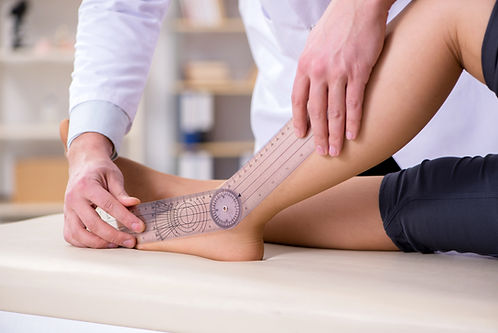
Assessment begins with understanding symptoms and activity levels, and is followed by a detailed clinical examination and gait assessment.
Custom foot orthotics are prescribed when appropriate to support more efficient movement and reduce strain during everyday activities, work, or sport.
Conditions commonly assessed include:
• Plantar fasciitis
• Achilles tendon pain
• Shin splints
• Knee pain related to foot mechanics
• Running injuries
• Foot pain in growing children
The aim is always to improve comfort and support more natural movement.
Complex Orthotic Care - Children with Neurological Conditions
A significant part of my work involves supporting children with neurological or developmental conditions that affect movement.
This includes the assessment and prescription of more complex orthoses, such as ankle foot orthoses (AFOs), which can help support alignment, stability, and walking ability.
Children may be referred for orthotic assessment for conditions such as:
-
Cerebral Palsy
-
Spina Bifida
-
Downs Syndrome
-
Charcot-Marie-Tooth disease (CMT)
-
Toe Walking (idiopathic, sensory)
-
Hyponia or muscle weakness
-
Developmental delay disorders affecting gait
Orthotic care is these situations is carefully planned and often involves collaboration with families and other healthcare professionals invlolved in the child's care.
The goal is to support each child's mobility, comfort and participation in everday activies.
Individualised Assessment and Care
Regardless of the condition being treated, orthotic care follows the same principles.
Each assessment includes:
• careful listening and understanding of concerns
• detailed clinical and biomechanical assessment
• evidence-based orthotic prescription
• clear explanation of treatment options
• follow-up and adjustment where needed
Orthotic treatment should never be rushed. Each orthotic solution is individually designed to support the person’s movement, comfort, and long-term function.
Listening First
Person-Centred Care & Compassion
Every assessment begins with listening carefully to understand the concerns and goals of the person or family attending the clinic.
For adults and children with musculoskeletal problems, this often involves discussing how pain affects daily activities, work, or sport.
For children with more complex needs, it includes understanding how movement difficulties affect mobility, balance, and participation in everyday activities.
Taking time to understand these concerns helps ensure orthotic recommendations are appropriate and meaningful.

Comprehensive Clinical Assessment
Orthotic treatment should always be based on detailed clinical assessment rather than assumptions.
Assessment typically includes examination of foot and lower limb alignment, joint mobility, muscle function, and walking pattern.
Where appropriate, gait analysis is used to better understand how movement patterns contribute to symptoms or mobility difficulties.
This process helps identify the underlying biomechanical factors that orthotic treatment aims to address.
Gait & Movement
Understanding how you move, load, and compensate during everyday activities.
Foot Structure
Assessing alignment, pressure distribution, and functional biomechanics.
Footwear Review
Ensuring orthotics integrate comfortably and practically into daily life.
Thoughtfully Designed Orthotics
Orthotics are designed to support the individual needs of each patient.
For musculoskeletal conditions, custom foot orthotics may help improve alignment, reduce strain on tissues, and support more comfortable movement.
For children requiring more complex orthotic care, devices such as ankle–foot orthoses are prescribed to support stability and walking ability.
Orthotic design is always guided by clinical findings and tailored to the individual rather than using a standardised approach.
Custom Design
Tailored to the individual, not just the diagnosis.
Precision Manufacture
Accuracy and quality at every stage of the process.
Comfort & Wearability
Designed to support movement throughout everyday life.

Ongoing Care and Follow-Up
Orthotic treatment does not end when the device is fitted.
Follow-up appointments allow orthotics to be reviewed and adjusted where necessary to ensure they continue to support comfort and movement.
For children, regular review is particularly important as growth and development may change orthotic needs over time.
The aim is always to ensure orthotic care continues to support each person’s mobility and long-term function.
Good orthotic care evolves as your needs change. Ongoing review ensures your orthotics continue to provide the right level of support, comfort, and function over time.